
Kling 3.0
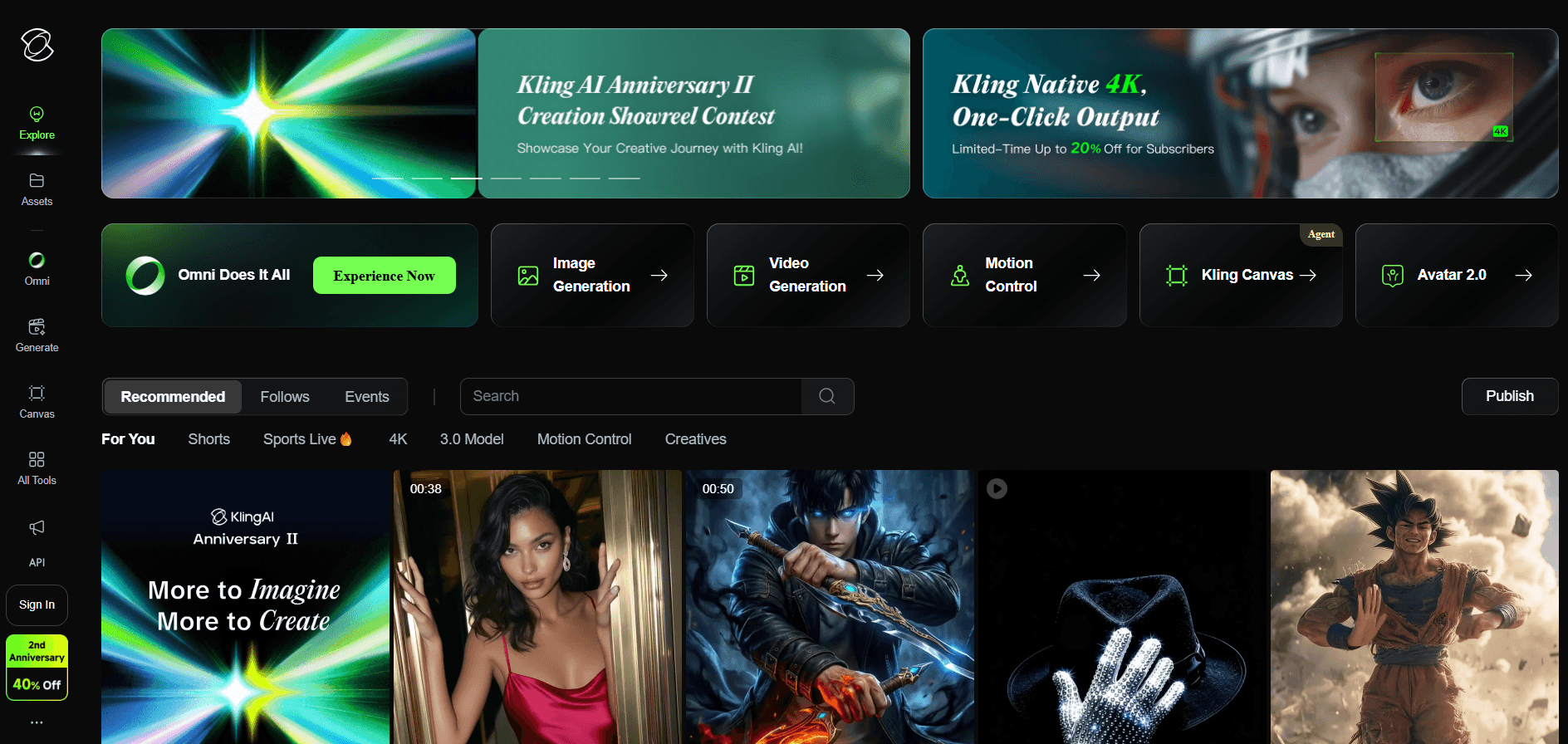
Kling 3.0 is an advanced AI-powered video generation tool that creates highly realistic, cinematic, and high-definition videos from text prompts and static images. It excels in physical world simulation, complex motion handling, and deep prompt understanding. Designed for filmmakers, content creators, and marketers, it pushes the boundaries of AI cinematography with smooth transitions, multi-angle consistency, and stunning visual details.
Face
Introduction
Kling 3.0 is a cutting-edge generative AI video platform built to turn imaginative text and image inputs into premium cinematic videos. It introduces powerful deep-learning physics models that accurately simulate real-world movements, lighting, and expressions. By giving creators precise control over camera angles, frame rates, and visual styles, Kling bridging the gap between independent imagination and professional studio-grade visual effects.
About
Developed as a top-tier competitor in the AI video space, Kling focuses on delivering high-fidelity motion graphics and lifelike video generations. The architecture relies on extensive spatial-temporal modeling, allowing it to predict how light, objects, and bodies move through space over time. It provides a web-based dashboard and native application ecosystem where creators can easily draft, tweak, and scale up their video production pipelines.
Work
Kling 3.0 allows creators to input descriptive prompts or source imagery to generate vivid video segments, simulate intricate environmental physics, control virtual cameras, and extend existing clips into longer cohesive stories. It operates as an intuitive creative director, handling rendering and motion generation so creators can focus entirely on visual storytelling and content scaling.
Key Features
Check out my core capabilities below:
Limitations
While highly capable, Kling 3.0 does have limitations. Rendering long-form or high-frame-rate sequences demands high computing power, making the free tier restrictive for heavy workflows. Subtle anomalies can still occur during rapid body rotations or highly complex object interactions. Additionally, achieving specific lipsyncing or localized fine-detail edits often requires secondary third-party tools.
Where Used
Kling 3.0 is primarily utilized by commercial video editors, digital artists, advertising agencies, and social media content creators. It serves as an efficient tool for quick concept storyboarding, rapid prototyping for films, generating social media shorts, and introducing high-end cinematic visuals into marketing campaigns without needing massive production budgets.
Pros and Cons
Every tool has its strengths and weaknesses:
Strengths
- ✓ Delivers industry-leading video realism and fluid natural movements.
- ✓ Exceptional prompt adherence, capturing complex scenes accurately.
- ✓ Transforms flat images into high-quality, dynamic video animations.
- ✓ Provides granular camera controls for cinematic storytelling.
- ✓ Active updates with continuous improvements to the generation model.
Weakness
- ✕ High render times during peak hours or for complex professional modes.
- ✕ High-tier features and extended video generation require paid subscription credits.
- ✕ Occasional physics anomalies or clipping in highly chaotic action scenes.
- ✕ Steep learning curve for perfecting prompts to get exact cinematic results.
- ✕ Limited direct native audio generation synced perfectly with complex lip movements.
Future
The landscape of AI video platforms like Kling is moving rapidly toward full-length scene generation, multi-character persistent tracking, and fully integrated spatial audio. Future iterations will likely offer direct integration with major non-linear editing software (NLEs), allowing real-time timeline editing, automatic depth mapping, and absolute control over granular lighting assets directly inside the generation prompt.
Challenges
Kling faces significant challenges in minimizing rendering bottlenecks and keeping server costs manageable as user demand scales. It must constantly innovate to prevent visual hallucinations in crowded frames while ensuring strict digital safety protocols to block the creation of misleading deepfakes. Competition from other major AI tech giants also pushes the need for faster generation speeds and more affordable pricing structure models.
Conclusion
Kling 3.0 stands out as a monumental leap forward for automated video production, shifting the focus from simple AI animations to genuine cinematic realism. By offering robust physics, dependable image-to-video capabilities, and granular camera tracking, it empowers creators to bring complex visual narratives to life effortlessly. As the technology matures, it is poised to become an indispensable asset in modern digital editing workflows.